Friday, April 9, 2010

N is for Nine and Narrative

Today's poetry collection contains many 19th Century standbys: Tennyson's Lady of Shallot, Browning's Pied Piper of Hamelin and Arnold's Forsaken Merman to name just a few. It's easy to imagine Anne Shirley glomming onto this book in order to prepare her recitations. There's also more contemporary narrative verse as well. I like the decidedly English tone of this one:

Uncle Alfred's Long Jump

When Mary Rand
Won the Olympic Long Jump,
My Auntie Hilda
Paced out the distance
On the pavement outside her house.
'Look at that!'
She shouted challengingly
At the dustman, the milkman, the grocer,
Two Jehovah's Witnesses
And a male St. Bernard
Who happened to be passing.
'A girl, a girl did that;
If you men are so clever
Let's see what you can do.'
Nobody took up the challenge
Until Uncle Alfred trudged home
Tired from the office
Asking for tea.
'Our Mary did that!'
Said Auntie Hilda proudly
Pointing from the lamppost
To the rose-bush by her gate.
'You men are so clever,
Let's see how near
That rose-bush you end up.'

His honour and manhood at stake,
Uncle Alfred put down his bowler
His brief-case and his brolly
And launched himself
Into a fifty yard run-up.
'End up at that rose-bush,'
He puffed mockingly,
"I'll show you where I'll end up.'
His take off from the lamppost
Was a thing of beauty,
But where he ended up
Was in The Royal Infirmary
With both legs in plaster.
'Some kind of record!'
He said proudly to the bone specialist;
While through long nights
In a ward full of coughs and snoring
He dreamed about the washing line
And of how to improve
His high jump technique.

--Gareth Owen

for more information on Mary Rand, click here
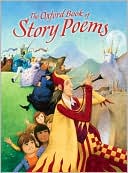


from, The Oxford Book of Story Poems, edited by Michael Harrison and Christopher Stuart-Clark. Oxford University Press, 1990, republished in paperback, 2006.

(Note: when quoting poems online, always include a full citation for the collection from which the poem originated. If the poem is not in the public domain (i.e. is still in copyright) abide by the principle of Fair Dealing in your use of the work.)

Thursday, April 8, 2010

There's something great at number 8

This month will yield all sorts of classics including the these two, single-author collections:

Politeness
If people ask me,
I always tell them:
"Quite well, thank you, I'm very glad to say."
If people ask me,
I always answer,
"Quite well, thank you, how are you to-day?"
I always answer,
I always tell them,
If they ask me
Politely. . . .
BUT SOMETIMES

           I wish

                      That they wouldn't.

--A. A. Milne


Halfway Down

Halfway down the stairs
Is a stair
Where I sit.
There isn't any
Other stair
Quite like
It.
I'm not at the bottom,
I'm not at the top;
So this is the satir
Where
I always
Stop.

Halfway up the stairs
Isn't up,
And isn't down.
It isn't in the nursery,
It isn't in the town.
And all sorts of funny thoughts
Run round my head:
"It isn't really
Anywhere!
It's somewhere else
Instead!"

--A. A. Milne

from When We Were Very Young, by A. A. Milne, (illustrations by Ernest Shepard). I have a reprint of the first Canadian edition, McClelland and Stewart, 1925.

A Thought
If I were John and John were Me,
Then he'd be six and I'd be three.
If John were me and I were John,
I shouldn't have these trousers on.

from When We Were Very Young, by A. A. Milne with decorations by Ernest H. Shepard. I have the first Canadian edition, McClelland and Stewart, 1927.

(Note: when quoting poems online, always include a full citation for the collection from which the poem originated. If the poem is not in the public domain (i.e. is still in copyright) abide by the principle of Fair Dealing in your use of the work.)

Wednesday, April 7, 2010

For Day 7, I thought I'd turn to one of the more prolific children's poets out there, Colin McNaughton.

An adapted bit of fun:

Monday's Child is Red and Spotty
Monday's child is red and spotty,
Tuesday's child won't use the potty.
Wednesday's child won't go to bed,
Thursday's child will not be fed.
Friday's child breaks all his toys,
Saturday's child makes an awful noise.
And the child that's born on the seventh day
Is a pain in the neck like the rest, OK!

And an inspired original:

The Lesson
"Blether, blather, blah-blah, bosh.
Claptrap, humbug, poppycock, tosh.
Guff, flap-doodle, gas and gabble.
Hocus pocus, gibberish, babble.
Baloney, hooey, jabber, phew,
Stuff and nonsense, drivel, moo.
Rhubarb, rhubarb, rhubarb, banter.
Prattle, waffle, rave and ranter.
Rubbish, piffle, tommy-rot, guff,
Twaddle, bilge, bombast, bluff.
      Thank you."

--Colin McNaughton


from There's an Awful Lot of Weirdos in Our Neighborhood & Other Wickedly Funny Verse, by Colin McNaughton. Simon & Schuster Books for Young Readers, 1987.

When Hallowe'en comes around you can also take a peek at his Making Friends With Frankenstein: A Book of Monstrous Poems and Pictures (Candlewick, 1994) in which you'll find this brief gem:

Speak of the Devil,
Meet Cousin Neville!

(Note: when quoting poems online, always include a full citation for the collection from which the poem originated. If the poem is not in the public domain (i.e. is still in copyright) abide by the principle of Fair Dealing in your use of the work.)

Tuesday, April 6, 2010

Canadian poetry: as concrete as the escarpment

It's Day 6 of poetry month. Here is one of several Canadian collections I'll feature during April. And it won't be the only concrete poem on the list, either--that is if Blogger doesn't eat all my spacing.

Niagara Falls

Kapuskasing sings
             Cornwall calls
                    Thunder Bay storms
                                And Niagara
                                                 FALLS!

--Robert Heidbreder


from See Saw Saskatchewan: More Playful Poems from Coast to Coast, written by Robert Heidbreder; illustrated by Scot Ritchie. Kids Can Press, 2003.

(Note: when quoting poems online, always include a full citation for the collection from which the poem originated. If the poem is not in the public domain (i.e. is still in copyright) abide by the principle of Fair Dealing in your use of the work.)

Monday, April 5, 2010

Poetry month: #5

The Monster's Birthday
Oh, what a party!
They all ate hearty
of elegant bellyache stew.

Then came the cake
In the shape of a snake
and trimmed with octopus goo.

The balloons all went BANG!
And everyone sang,
"Happy birthday, dear Monster, to you."

--Lilian Moore

from Monster Poems, edited by Daisy Wallace; illustrated by Kay Chorao. Holiday House: 1976.

(Note: when quoting poems online, always include a full citation for the collection from which the poem originated. If the poem is not in the public domain (i.e. is still in copyright) abide by the principle of Fair Dealing in your use of the work.)

Sunday, April 4, 2010

More, more, bring on four.

There was a pigeon,
A mighty flier,
His friends all called him
Pigeon McGuire.

But he perched upon
An electric wire--
And that was the end of
Pigeon McGuire!

--Langston Hughes

from The Sweet and Sour Animal Book, alphabet animal poems by Langston Hughes; illustrated by the students of the Harlem School of the Arts. Oxford UP: 1994.

(Note: when quoting poems online, always include a full citation for the collection from which the poem originated. If the poem is not in the public domain (i.e. is still in copyright) abide by the principle of Fair Dealing in your use of the work.)

Saturday, April 3, 2010

Two by two leads to number three

Poetry month continues. And now for #3.

Ar-A-Rat
I know a rat on Ararat,
He isn't thin, he isn't fat
Never been chased by any cat,
Not that rat on Ararat.
He's sitting high on a mountain breeze,
Never tasted any cheese,
Never chewed up any old hat,
Not that rat on Ararat.
He just sits alone on a mountain breeze,
Wonders why the trees are green,
Ponders why the ground is flat,
O that rat on Ararat.
His eyes like saucers in the dark--
The last to slip from Noah's ark.

--Grace Nichols

from No Hickory, No Dickory, No Dock: Caribbean Nursery Rhymes, written and remembered by John Agard and Grace Nichols; illustrated by Cynthia Jabar. Candlewick: 1995.

Might I also suggest: Under the Moon and Over the Sea: A Collection of Caribbean Poems, edited by John Agard and Grace Nichols; various illustrators. Candlewick: 2002.

(Note: when quoting poems online, always include a full citation for the collection from which the poem originated. If the poem is not in the public domain (i.e. is still in copyright) abide by the principle of Fair Dealing in your use of the work.)