School Library Journal is counting down the top 100 Children's Novels of all time right now. Yes, it's yet another list, but I am very much enjoying watching this one unfold. SLJ blogger, Elizabeth Bird, asked readers to submit ranked top 10 ten lists of middle-grade novels. Each novel was assigned a score and now the countdown has begun. What I like about this countdown is 1) that it is reader-oriented--these are books we LOVE--and 2) that Bird, who works as a librarian in the New York Public Library system, has taken great pains to tell us about the books and why people have fallen in love with them. You can't read this list and not want to add to the pile beside your bedside table.
The countdown started Monday. #100-91 are here, #90-86 are here, and #85-81 are here. You can also check out last year's Top 100 Picture Book Poll or if you want to get in on some voting, you can still take part in Comic Book Resources Top 100 Comic Books Poll. I'm betting that this time next year, SLJ will be counting down YA. I can hardly wait.
So, tell me, what some of your all-time favourites when it comes to novels for the 8-12 set?
Wednesday, February 10, 2010

Tuesday, February 2, 2010
In which I 'fess up
When I was a kid I didn't read very many books at all. I was poor and lived in the middle of nowhere. The local library was 5kms away and, with 1 car and a whack of kids in tow, my mom didn't get a chance to take us there very often. The few book shelves we had at home were lined with Reader's Digest Condensed Books and several "A-B" volumes of encyclopedias that were free sample give-aways at the grocery store. It wasn't until I was in Grade 11 that an inspiring English teacher really showed me what it meant to get lost in a book. I haven't quite found my way out yet.
Back then, the not-yet grown-up me devoured Dickens, Bradbury, Huxley, Tolkien, Salinger and John Fowles. A few years later I found myself in the second year of an undergraduate degree. I registered for what I hoped would be an easy elective for an English major: Children's Literature. That class and its instructor, Stan Dragland, changed my life. First off, the course was not at all easy. The reading load was heavy and we were required to submit weekly written assignments in addition to weighty term papers. Over the course of the year my writing improved, my critical thinking skills sharpened and, for the first time in my life, I learned that children's literature is rich, diverse, and complex. Heaven forbid anyone call it a lesser literature in my presence. Ursula Le Guin, Alan Garner, E.B. White, T.H. White, Natalie Babbitt, Lewis Carroll, Patricia MacLachlan, Louise Fitzhugh and L.M. Montgomery were all on that syllabus. There's nothing diminutive about them.
Since taking that life-changing class, I have read, literally, thousands of children's and young adult books. I do, however, have a shame-faced confession to make.
Gulp.
I've never read The Wizard of Oz.
I've never read Pippi Longstocking.
Nor have I read Little House on the Prairie.
In fact, I've not read any Baum, Lindgren, or Wilder whatsoever. There are others too--gaping holes in my knowledge of the genre that has given me my livelihood. And so this year, I vow to read at least one work by the following:
Avi
Lloyd Alexander
Frank Baum
Kevin Crossley-Holland
Peter Dickinson
Ann Fine
Virginia Hamilton
Rumer Godden
Julius Lester
Astrid Lindgren
Tamora Pierce
Laura Ingalls Wilder
Would any of you like to suggest the best individual titles from any one of those authors to get me started? Alternatively, would you like to confess your dirty, secret lapses in reading? C'mon, you can do it. That's why the comment section is there.
Back then, the not-yet grown-up me devoured Dickens, Bradbury, Huxley, Tolkien, Salinger and John Fowles. A few years later I found myself in the second year of an undergraduate degree. I registered for what I hoped would be an easy elective for an English major: Children's Literature. That class and its instructor, Stan Dragland, changed my life. First off, the course was not at all easy. The reading load was heavy and we were required to submit weekly written assignments in addition to weighty term papers. Over the course of the year my writing improved, my critical thinking skills sharpened and, for the first time in my life, I learned that children's literature is rich, diverse, and complex. Heaven forbid anyone call it a lesser literature in my presence. Ursula Le Guin, Alan Garner, E.B. White, T.H. White, Natalie Babbitt, Lewis Carroll, Patricia MacLachlan, Louise Fitzhugh and L.M. Montgomery were all on that syllabus. There's nothing diminutive about them.
Since taking that life-changing class, I have read, literally, thousands of children's and young adult books. I do, however, have a shame-faced confession to make.
Gulp.
I've never read The Wizard of Oz.
I've never read Pippi Longstocking.
Nor have I read Little House on the Prairie.
In fact, I've not read any Baum, Lindgren, or Wilder whatsoever. There are others too--gaping holes in my knowledge of the genre that has given me my livelihood. And so this year, I vow to read at least one work by the following:
Avi
Lloyd Alexander
Frank Baum
Kevin Crossley-Holland
Peter Dickinson
Ann Fine
Virginia Hamilton
Rumer Godden
Julius Lester
Astrid Lindgren
Tamora Pierce
Laura Ingalls Wilder
Would any of you like to suggest the best individual titles from any one of those authors to get me started? Alternatively, would you like to confess your dirty, secret lapses in reading? C'mon, you can do it. That's why the comment section is there.
Tuesday, January 12, 2010
Before you grow up
Look at the lovely bit of lovely I picked up over the holidays:
 1001 Children's Books You Must Read Before You Grow Up, Universe, 2009
Edited by Julia Eccleshare, children's book editor for The Guardian, with a preface by Quentin Blake, this is not a reference tome to be brushed aside lightly. And, oh my, the list provided is rich indeed. It's also quite detailed. The book is divided into 5 age categories from birth to young adult. Each book mentioned is accompanied by a meaty, signed annotation, all of which are written by prominent writers, reviewers and academics of children's literature.
As with all list books, it is one part canon-formation and one part springboard for discussion and dissent. My heart leapt so see favourite titles like Shirley Hughes' Dogger and Dodie Smith's I Capture the Castle on the list, but I was baffled by many other choices and omissions. Why, for example, does the book have 6 titles by Italo Calvino and none by Gerald McDermott? As much as I love William Steig, Alan Garner, John Burningham, Mo Willems, Phillipa Pearce and Quentin Blake (along with many others), why do they have multiple titles represented to the exclusion of key voices such as Nancy Farmer, Peter Spier, Diana Wynne Jones and David Macaulay?
Where for art thou, Farmer Duck?
Come back to the Five and Dime, Iona Opie, Iona Opie?
And, ahem, might I mention that the Caldecott award is named after a pretty influential fellow?--you know, the kind of guy you might want on a list like this. In fact, you might want to choose him over, say, Stephanie Meyer.
I could go on, but I won't because I do think the list that is provided is pretty darn good. Marketed as a popular reference source, it is likely to end up in many households as well as most public libraries. May it lead to more reading and more varied reading for all ages.
Eccelshare makes an effort to provide international, English language representation, which I do applaud, and I notice that there are some fine Canadian writers included in the list: L.M. Montgomery (natch), Elizabeth Cleaver, Monica Hughes, Robert Munsch, Tim Wynne Jones, Deborah Ellis and Margaret Atwood all caught my eye. In the spirit of expanding discussion rather than critique, I would like to provide you with a list of even more Canadian books for children that you should read before you grow up. Print off this list, slip it into the back of 1001 Books, and think of it as an appendix.
In rough age order from birth to adulthood here are
30 31 32 Additional Canadian Books for Children That you Should Read Before You Grow Up
1. Kathy Stinson: Red is Best, 1982
Robin Baird Lewis' simple use of primary colours makes Stinson's story of a toddler's favourite colour flower on the page.
2. Roslyn Schwartz: The Complete Adventures of the Mole Sisters: 10 Stories, 2004
I know I am cheating by picking a collection but the mole sisters' quiet appreciation of the natural world around them grows on the reader, small perfect story after small perfect story.
3. Gilles Tibo: Simon and His Boxes, 1992
Simple text, evocative drawings. Tibo's magic realism for the very young instills a sense of wonder in child and adult alike.
4. Amelia Frances Howard-Gibbon: An Illustrated Comic Alphabet, (1859) 1966
Believed to be the first Canadian picture book, this 1859 work was not actually published until 1966. The illustrations look to be part of a strong tradition of 19thC children's book illustration but they pre-date those by Caldecott, Brooke and Greenaway. Only in Canada you say? Pity.
5. Marie-Louise Gay: Stella: Star of the Sea, 1999
For whimsy, poetic language, and masterful character depiction, any Stella and Sam book will do, but the first one, published originally in French as Stella: étoile de la mer, has its own special magic. Oh, just read everything Gay writes/illustrates. You won't regret it.
6. Barbara Reid: Two By Two, 1992
Reid's incredibly detailed clay models speak to her commitment to her craft. Two By Two is a sing-a-long retelling of the story of Noah's Ark. It's my personal favourite of hers but my 4-yr-old daughter is quite keen on The Subway Mouse as well. Reid has also created illustrations for other prominent Canadian children's authors: Jo Ellen Bogart's Gifts and Kenneth Oppel's Peg and the Yeti are standouts for me.
7. Tomsom Highway: Dragonfly Kites, 2002
Tomson Highway's children's book are told in English and Cree and tell of young native children who have a strong link to their cultural heritage. Brian Deines' muted watercolours complement Highway's sparse, imagistic language.
8. Dennis Lee: Alligator Pie, 1974
Alligator Pie started the conversation about poetry for children in Canada. Now we are a nation rich with children's poetry. Enough said.
9. Phoebe Gilman: Something From Nothing, 1992
The woman who penned the very popular Jillian Jiggs books has so many other wonderful stories to her credit. My daughter's long-time favourite is The Gypsy Princess. I, however, don't think anyone retells the Jewish folktale of Joseph and his overcoat better than Gilman does in Something From Nothing. Don't forget to watch the mouse family under the floor boards.
10. Jean Little: Pippin the Christmas Pig, 2003
Jean Little is a fixture of Canadian children's literature who writes for a broad range of ages. I am partial to this contemporary retelling of the Christmas story through the eyes of a small, seemingly insignificant pig.
11. Tom King: A Coyote Columbus, 1992
Lovers of The Dead Dog Comedy Hour on CBC radio will love King's irreverant take on first contact. William Kent Monkman's neon illustrations can be a bit much on the eye but they are well suited to the sass of Coyote, the baseball cheat.
12. Sheree Fitch: Sleeping Dragons All Around, 1989 (2009)
No other Canadian writer for children delights in language quite the way Sheree Fitch does. Her poetry explodes with rhyme, image and assonance, and she is always doing her utmost to expand a child's vocabulary in the most precocious manner possible. Sleeping Dragons was recently republished by Nimbus Press in a 20th anniversary edition. Get it before it's gone.
13. Dominique Jolin: Old Thomas and the Little Fairy, 2000
Despair, hope, love and death: Jolin's fable of an old man who nurses a wounded fairy back to health is anything but simple. Stéphane Poulin's evokative and moody illustrations are exactly what the story demands.
14. Ian Wallace: The True Story of Trapper Jack's Left Big Toe, 2002
This list wouldn't be complete without a tall tale. I like this one from the Yukon rendered with ease and wonder by CanLit mainstay, Ian Wallace. Just what is in that empty tobacco tin in the Sourdough Saloon? Read this book and maybe, just maybe, you'll find out.
15. Nan Gregory: How Smudge Came, 1995
Cindy finds a puppy and wants to keep it. Can a children's story be more cliché than this? Ah, but if you tell that story with just the right combination of words, and if you combine that story with illustrations that round it out with complexity and nuance, then what you're left with is a work of art. Ron Lightburn, illustrator.
16. Roch Carrier: The Hockey Sweater, 1984
It's a classic, sure, this tale of the young Canadiens' fan who mistakenly receives a Leafs' jersey from the Eaton's catalogue. I personally don't think it's a particularly good children's story per se--more of a nostalgic adult reminicence--but you can't really be a Canadian and not read it. It's become part of our cultural lexicon.
17. Mordecai Richler: Jacob Two-Two Meets the Hooded Fang, 1975
Jacob Two-Two is two plus two plus two years old and has a habit of saying everything twice in order to be heard above his two older sisters and two older brothers. A funny, surreal chapter book that's wonderfully Richler all the way. Psst: there are two sequels.
18. Janet Lunn: The Twelve Dancing Princesses, 1979
Lunn's adaptation of of this French folktale, expertly illustrated by Canada's premiere folklore illustrator, Laszlo Gal, is a must. It's also just one of many examples of quality Canadian contributions to the illustrated folklore tradition.
19. Paul Yee: Ghost Train, 1997
A dark story about a dark chapter in Canada's history, Ghost Train tells of Choon-yi, a young Chinese girl and artist, who emigrates to Canada to join her father. Only when she arrives does she learn that he has been killed while working to build the national railroad. Illustrations by Harvey Chan.
20. Gordon Korman: This Can't Be Happening at MacDonald Hall, 1978
This novel was written when Korman was in the seventh grade and was published when he was 14 years old. 60+ novels later, Canada's wunderkind is all grown up and still publishing fun, funny, and sometimes dark novels for children and young adults.
21. Brian Doyle: Angel Square, 1984
An honour book for the Children's Literature Association's Phoenix Award in 2004, Doyle's Angel Square does indeed have staying power. Religion, class and the long shadow of World War II are all mixed up in Angel Square, the neighbourhood where Tommy first enters the world of really knowing.
22. Bernice Thurman Hunter: That Scatterbrain Booky, 1981
Set in The Great Depression, Hunter's series of Booky novels combine an endearing heroine with detailed historical realism. These books are an unacknowledged pre-cursor to the more recent historical fiction series, Our Canadian Girl and Dear Canada.
23. Joan Clark: The Moons of Madeline, 1987
Madeline, on the cusp of her teen years, travels to Calgary to visit her cousin. Feeling homesick, one night she dons a moon mask that was made for her by her friend, Old Angus. The mask is a portal to a fantastic world where Madeline encounters a society of priestesses. The Moons of Madeline is a cornerstone in the Canadian children's fantasy genre. It's also a little slice of old school girl power, dated but delicious.
24. Polly Horvath: Everything on a Waffle, 2001
Whacky, dark and filled with memorable characters who have even more memorable names--that's what Horvath's novels are. I particularly liked this one and The Canning Season, 2003, wherein a character actually manages to decapitate herself. Despite the dark overtones to Horvath's writing, the novels are filled with love and deep, meaningful human connection.
25. Arthur Slade: Dust, 2001
A positively creepy tale set in enchanted-reality version of depression-era Saskachewan. The first chapter had me hyperventilating in fear, and I simply could not exhale or put the book down until I was done. Winner of the Governor-General's Literary Award.
26. Budge Wilson: Fractures, 2002
Thanks to Alice Munroe, Canada is known as a literary powerhouse in the short story genre. For the young adult set, I like this collection of dysfuntional domestic tales by Nova Scotia's Budge Wilson.
27. Beth Goobie: Before Wings, 2000
I think Beth Goobie is one of the best, most literary writers for young adults alive. In Before Wings, 15-year-old Adrien learns to live in the face of death (she's suffered one brain aneurysm and fears she may suffer another). She does this by spending the summer at her aunt Erin's camp, where she slips between past and present, uncovering a mystery that has haunted both the camp and her brittle aunt.
28. Kevin Major: Ann and Seamus, 2003
What? You thought I had forgotten poetry when I left the books for young children behind? Ann and Seamus is a series of poems that tells the historical account of Ann Harvey, a Newfoundland girl who helps to rescue passengers from the shipwrecked Despatch in 1828. The poems recount her courtship with one of the passengers, Seamus, and her ultimate decision about whether to follow him or stay in Newfoundland.
29. Kenneth Oppel: Airborn, 2004
Canada's other wunderkind, Kenneth Oppel, was discovered by Roald Dahl when he was fourteen years old. He has numerous great books for children of all ages but is most famous for his Silverwing series and his Airborn series. I must confess that I have not yet read the former but I loved the Airborn series with its hot air balloons and fantastically distorted version of the world we live in. Steam punk has recently become all the rage in YA. The market and my tastes may be reaching surfeit point, but Airborn somehow remains fresh six years later.
30. W. O. Mitchell Who Has Seen the Wind, 1947
Reading this novel about growing up on the prairies, about learning of God, love, nature and death, is a mandatory rite of passage isn't it? Isn't it?
31. Martha Brooks: True Confessions of a Heartless Girl, 2002
A young woman whose need is great is taken in by a caring community. This novel is the all-grown-up version of Pippin the Christmas Pig, for it reveals how we transform ourselves when we have the courage to accept and nurture others without fear.
32. Joy Kogawa Obasan, 1981
Naomi, a teacher in her mid-thirties, visits her aging aunt in order to care for her. During her visit she relives her childhood experiences during and following WWII when her family was forcibly moved from BC to Alberta to work on a sugar beet farm as interned Japanese Canadians.
Must stop now. The trouble is I keep thinking of others that could and should be added to this list (Bah! Teddy Jam's Night Cars, Zeman's retellings of Gilgamesh, Sheppard's Seven for a Secret...). And don't forget I haven't included any works by Canadian authors that were included 1001 Books.
Ah, but the best thing about my list is that you and you and you can keep on adding to it in the comment section. Have a title you know must be here? Let me know and write your own brief annotation.
 1001 Children's Books You Must Read Before You Grow Up, Universe, 2009
Edited by Julia Eccleshare, children's book editor for The Guardian, with a preface by Quentin Blake, this is not a reference tome to be brushed aside lightly. And, oh my, the list provided is rich indeed. It's also quite detailed. The book is divided into 5 age categories from birth to young adult. Each book mentioned is accompanied by a meaty, signed annotation, all of which are written by prominent writers, reviewers and academics of children's literature.
As with all list books, it is one part canon-formation and one part springboard for discussion and dissent. My heart leapt so see favourite titles like Shirley Hughes' Dogger and Dodie Smith's I Capture the Castle on the list, but I was baffled by many other choices and omissions. Why, for example, does the book have 6 titles by Italo Calvino and none by Gerald McDermott? As much as I love William Steig, Alan Garner, John Burningham, Mo Willems, Phillipa Pearce and Quentin Blake (along with many others), why do they have multiple titles represented to the exclusion of key voices such as Nancy Farmer, Peter Spier, Diana Wynne Jones and David Macaulay?
Where for art thou, Farmer Duck?
Come back to the Five and Dime, Iona Opie, Iona Opie?
And, ahem, might I mention that the Caldecott award is named after a pretty influential fellow?--you know, the kind of guy you might want on a list like this. In fact, you might want to choose him over, say, Stephanie Meyer.
I could go on, but I won't because I do think the list that is provided is pretty darn good. Marketed as a popular reference source, it is likely to end up in many households as well as most public libraries. May it lead to more reading and more varied reading for all ages.
Eccelshare makes an effort to provide international, English language representation, which I do applaud, and I notice that there are some fine Canadian writers included in the list: L.M. Montgomery (natch), Elizabeth Cleaver, Monica Hughes, Robert Munsch, Tim Wynne Jones, Deborah Ellis and Margaret Atwood all caught my eye. In the spirit of expanding discussion rather than critique, I would like to provide you with a list of even more Canadian books for children that you should read before you grow up. Print off this list, slip it into the back of 1001 Books, and think of it as an appendix.
In rough age order from birth to adulthood here are
1. Kathy Stinson: Red is Best, 1982
Robin Baird Lewis' simple use of primary colours makes Stinson's story of a toddler's favourite colour flower on the page.
2. Roslyn Schwartz: The Complete Adventures of the Mole Sisters: 10 Stories, 2004
I know I am cheating by picking a collection but the mole sisters' quiet appreciation of the natural world around them grows on the reader, small perfect story after small perfect story.
3. Gilles Tibo: Simon and His Boxes, 1992
Simple text, evocative drawings. Tibo's magic realism for the very young instills a sense of wonder in child and adult alike.
4. Amelia Frances Howard-Gibbon: An Illustrated Comic Alphabet, (1859) 1966
Believed to be the first Canadian picture book, this 1859 work was not actually published until 1966. The illustrations look to be part of a strong tradition of 19thC children's book illustration but they pre-date those by Caldecott, Brooke and Greenaway. Only in Canada you say? Pity.
5. Marie-Louise Gay: Stella: Star of the Sea, 1999
For whimsy, poetic language, and masterful character depiction, any Stella and Sam book will do, but the first one, published originally in French as Stella: étoile de la mer, has its own special magic. Oh, just read everything Gay writes/illustrates. You won't regret it.
6. Barbara Reid: Two By Two, 1992
Reid's incredibly detailed clay models speak to her commitment to her craft. Two By Two is a sing-a-long retelling of the story of Noah's Ark. It's my personal favourite of hers but my 4-yr-old daughter is quite keen on The Subway Mouse as well. Reid has also created illustrations for other prominent Canadian children's authors: Jo Ellen Bogart's Gifts and Kenneth Oppel's Peg and the Yeti are standouts for me.
7. Tomsom Highway: Dragonfly Kites, 2002
Tomson Highway's children's book are told in English and Cree and tell of young native children who have a strong link to their cultural heritage. Brian Deines' muted watercolours complement Highway's sparse, imagistic language.
8. Dennis Lee: Alligator Pie, 1974
Alligator Pie started the conversation about poetry for children in Canada. Now we are a nation rich with children's poetry. Enough said.
9. Phoebe Gilman: Something From Nothing, 1992
The woman who penned the very popular Jillian Jiggs books has so many other wonderful stories to her credit. My daughter's long-time favourite is The Gypsy Princess. I, however, don't think anyone retells the Jewish folktale of Joseph and his overcoat better than Gilman does in Something From Nothing. Don't forget to watch the mouse family under the floor boards.
10. Jean Little: Pippin the Christmas Pig, 2003
Jean Little is a fixture of Canadian children's literature who writes for a broad range of ages. I am partial to this contemporary retelling of the Christmas story through the eyes of a small, seemingly insignificant pig.
11. Tom King: A Coyote Columbus, 1992
Lovers of The Dead Dog Comedy Hour on CBC radio will love King's irreverant take on first contact. William Kent Monkman's neon illustrations can be a bit much on the eye but they are well suited to the sass of Coyote, the baseball cheat.
12. Sheree Fitch: Sleeping Dragons All Around, 1989 (2009)
No other Canadian writer for children delights in language quite the way Sheree Fitch does. Her poetry explodes with rhyme, image and assonance, and she is always doing her utmost to expand a child's vocabulary in the most precocious manner possible. Sleeping Dragons was recently republished by Nimbus Press in a 20th anniversary edition. Get it before it's gone.
13. Dominique Jolin: Old Thomas and the Little Fairy, 2000
Despair, hope, love and death: Jolin's fable of an old man who nurses a wounded fairy back to health is anything but simple. Stéphane Poulin's evokative and moody illustrations are exactly what the story demands.
14. Ian Wallace: The True Story of Trapper Jack's Left Big Toe, 2002
This list wouldn't be complete without a tall tale. I like this one from the Yukon rendered with ease and wonder by CanLit mainstay, Ian Wallace. Just what is in that empty tobacco tin in the Sourdough Saloon? Read this book and maybe, just maybe, you'll find out.
15. Nan Gregory: How Smudge Came, 1995
Cindy finds a puppy and wants to keep it. Can a children's story be more cliché than this? Ah, but if you tell that story with just the right combination of words, and if you combine that story with illustrations that round it out with complexity and nuance, then what you're left with is a work of art. Ron Lightburn, illustrator.
16. Roch Carrier: The Hockey Sweater, 1984
It's a classic, sure, this tale of the young Canadiens' fan who mistakenly receives a Leafs' jersey from the Eaton's catalogue. I personally don't think it's a particularly good children's story per se--more of a nostalgic adult reminicence--but you can't really be a Canadian and not read it. It's become part of our cultural lexicon.
17. Mordecai Richler: Jacob Two-Two Meets the Hooded Fang, 1975
Jacob Two-Two is two plus two plus two years old and has a habit of saying everything twice in order to be heard above his two older sisters and two older brothers. A funny, surreal chapter book that's wonderfully Richler all the way. Psst: there are two sequels.
18. Janet Lunn: The Twelve Dancing Princesses, 1979
Lunn's adaptation of of this French folktale, expertly illustrated by Canada's premiere folklore illustrator, Laszlo Gal, is a must. It's also just one of many examples of quality Canadian contributions to the illustrated folklore tradition.
19. Paul Yee: Ghost Train, 1997
A dark story about a dark chapter in Canada's history, Ghost Train tells of Choon-yi, a young Chinese girl and artist, who emigrates to Canada to join her father. Only when she arrives does she learn that he has been killed while working to build the national railroad. Illustrations by Harvey Chan.
20. Gordon Korman: This Can't Be Happening at MacDonald Hall, 1978
This novel was written when Korman was in the seventh grade and was published when he was 14 years old. 60+ novels later, Canada's wunderkind is all grown up and still publishing fun, funny, and sometimes dark novels for children and young adults.
21. Brian Doyle: Angel Square, 1984
An honour book for the Children's Literature Association's Phoenix Award in 2004, Doyle's Angel Square does indeed have staying power. Religion, class and the long shadow of World War II are all mixed up in Angel Square, the neighbourhood where Tommy first enters the world of really knowing.
22. Bernice Thurman Hunter: That Scatterbrain Booky, 1981
Set in The Great Depression, Hunter's series of Booky novels combine an endearing heroine with detailed historical realism. These books are an unacknowledged pre-cursor to the more recent historical fiction series, Our Canadian Girl and Dear Canada.
23. Joan Clark: The Moons of Madeline, 1987
Madeline, on the cusp of her teen years, travels to Calgary to visit her cousin. Feeling homesick, one night she dons a moon mask that was made for her by her friend, Old Angus. The mask is a portal to a fantastic world where Madeline encounters a society of priestesses. The Moons of Madeline is a cornerstone in the Canadian children's fantasy genre. It's also a little slice of old school girl power, dated but delicious.
24. Polly Horvath: Everything on a Waffle, 2001
Whacky, dark and filled with memorable characters who have even more memorable names--that's what Horvath's novels are. I particularly liked this one and The Canning Season, 2003, wherein a character actually manages to decapitate herself. Despite the dark overtones to Horvath's writing, the novels are filled with love and deep, meaningful human connection.
25. Arthur Slade: Dust, 2001
A positively creepy tale set in enchanted-reality version of depression-era Saskachewan. The first chapter had me hyperventilating in fear, and I simply could not exhale or put the book down until I was done. Winner of the Governor-General's Literary Award.
26. Budge Wilson: Fractures, 2002
Thanks to Alice Munroe, Canada is known as a literary powerhouse in the short story genre. For the young adult set, I like this collection of dysfuntional domestic tales by Nova Scotia's Budge Wilson.
27. Beth Goobie: Before Wings, 2000
I think Beth Goobie is one of the best, most literary writers for young adults alive. In Before Wings, 15-year-old Adrien learns to live in the face of death (she's suffered one brain aneurysm and fears she may suffer another). She does this by spending the summer at her aunt Erin's camp, where she slips between past and present, uncovering a mystery that has haunted both the camp and her brittle aunt.
28. Kevin Major: Ann and Seamus, 2003
What? You thought I had forgotten poetry when I left the books for young children behind? Ann and Seamus is a series of poems that tells the historical account of Ann Harvey, a Newfoundland girl who helps to rescue passengers from the shipwrecked Despatch in 1828. The poems recount her courtship with one of the passengers, Seamus, and her ultimate decision about whether to follow him or stay in Newfoundland.
29. Kenneth Oppel: Airborn, 2004
Canada's other wunderkind, Kenneth Oppel, was discovered by Roald Dahl when he was fourteen years old. He has numerous great books for children of all ages but is most famous for his Silverwing series and his Airborn series. I must confess that I have not yet read the former but I loved the Airborn series with its hot air balloons and fantastically distorted version of the world we live in. Steam punk has recently become all the rage in YA. The market and my tastes may be reaching surfeit point, but Airborn somehow remains fresh six years later.
30. W. O. Mitchell Who Has Seen the Wind, 1947
Reading this novel about growing up on the prairies, about learning of God, love, nature and death, is a mandatory rite of passage isn't it? Isn't it?
31. Martha Brooks: True Confessions of a Heartless Girl, 2002
A young woman whose need is great is taken in by a caring community. This novel is the all-grown-up version of Pippin the Christmas Pig, for it reveals how we transform ourselves when we have the courage to accept and nurture others without fear.
32. Joy Kogawa Obasan, 1981
Naomi, a teacher in her mid-thirties, visits her aging aunt in order to care for her. During her visit she relives her childhood experiences during and following WWII when her family was forcibly moved from BC to Alberta to work on a sugar beet farm as interned Japanese Canadians.
Must stop now. The trouble is I keep thinking of others that could and should be added to this list (Bah! Teddy Jam's Night Cars, Zeman's retellings of Gilgamesh, Sheppard's Seven for a Secret...). And don't forget I haven't included any works by Canadian authors that were included 1001 Books.
Ah, but the best thing about my list is that you and you and you can keep on adding to it in the comment section. Have a title you know must be here? Let me know and write your own brief annotation.
Monday, December 21, 2009
A down-home Christmas
One of the earliest copies of Clement Moore's "The Night Before Christmas" or "A Visit from Saint Nicholas" resides right here in Fredericton, New Brunswick. It was handwritten by Moore and sent in 1825 to his godfather, Jonathan Odell, a prominent resident of Fredericton. Over the years, this bit of literary trivia has captured the city's imagination to the point where you'd sometimes think that this is what Christmas must be: an artifact shipped in from afar, a bit of fame whose coat-tails must be clung to.
And yet, this region represents a picture-perfect Christmas postcard all on its own. Juliana Horatia Ewing knew this when, in 1867, she wrote the region's first Christmas story while living in Fredericton with her husband, Captain Alexander Ewing, an officer in Her Majesty's 22nd (Chesire) Regiment. The story, "The Three Christmas Trees", was published in the collection The Brownies and Other Tales (1886) and can be read online here. One hundred and fifty years later, Ewing's prose stills delights and the picture of that "small town of a distant colony" remains quaint, sure, but fits snugly into this spiritual narrative of the link between our world and the world beyond.
Flash forward to the 1950s where you will find these three hidden Nova Scotia gems: In The Wee Folk: About the Elves in Nova Scotia by Mary Alma Dillman (1953), the first story is "Xmas Eve in Teaberry Hollow" wherein Santa and Mrs Claus rescue Peter, the young elf who gets caught in a blizzard and becomes frozen solid; Alice Dagliesh rounds out her collection The Blue Teapot (1959) with the tale of a family who get their first set of electric Christmas lights; and Julia L. Sauer's 1951 novel, The Light at Tern Rock, tells of an eldery woman and a young boy who spend their Christmas tending a lighthouse off the coast of Nova Scotia.
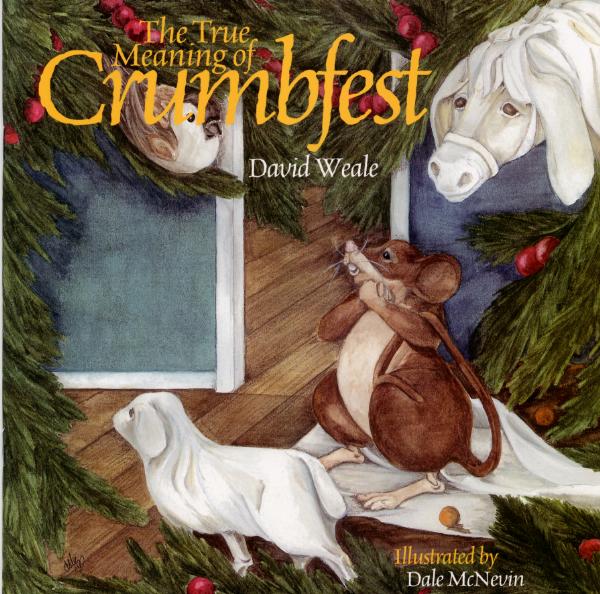
For an non-Avonlea take on Christmas in P.E.I. try David Weale's picture books, The True Meaning of Crumbfest (Acorn Press, 1999) and Everything that Shines (Acorn Press, 2001). In the former, a young mouse sets out to discover the origins of the plentiful crumbs that come to his people each year in late December. The latter is not so much a Christmas book, but rather a book about dealing with grief that happens to be set in the holiday season.
Newfoundland's Kevin Major has penned two contemporary Christmas classics: The House of the Wooden Santas (1997 Red Deer College Press) and Aunt Olga's Christmas Postcards (Groundwood, 2005).
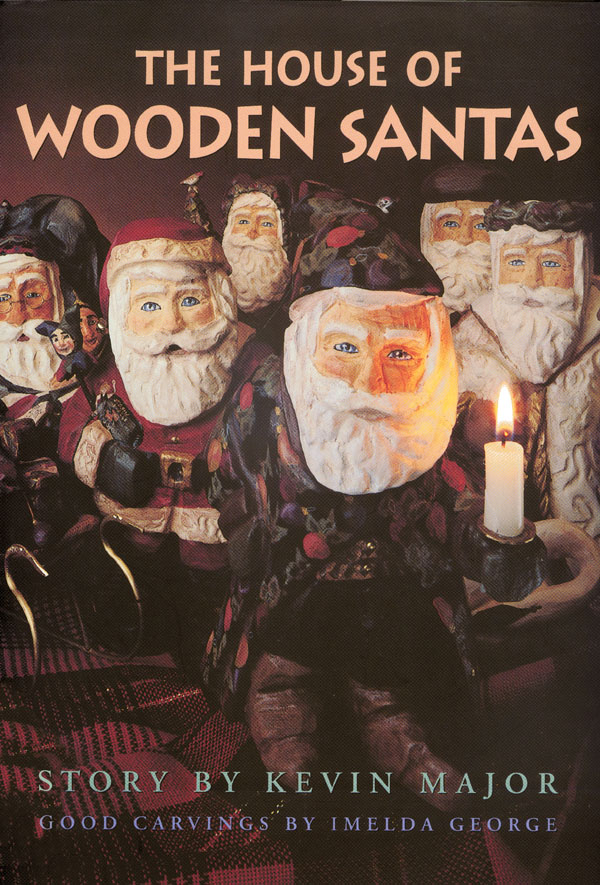
The House of the Wooden Santas is an advent book with one vignette a day for the 24-day lead up to Christmas. As you can see from the illustration above, Imelda George's wood carvings add to the quirky yet lush feel of the book.

Aunt Olga's Christmas Postcards is a tribute to holiday picture postcards from all over the world. Images of hundred-year-old cards are combined with contemporary illustrations from Bruce Roberts as the tale (and poetry) of Aunt Olga and her family unfolds.

Finally, from Newfoundland is David Budge's The Mummer's Song, illustrated by Ian Wallace. This picture book is a simple rhyming tribute to the practice of mumming between Christmas and New Years' in rural Newfoundland. An afterword by Kevin Major explains the tradition to novices.
For additional Christmas books from the region, click over to the Portolan Bibliography where you can search "Christmas" and so much more besides.
And yet, this region represents a picture-perfect Christmas postcard all on its own. Juliana Horatia Ewing knew this when, in 1867, she wrote the region's first Christmas story while living in Fredericton with her husband, Captain Alexander Ewing, an officer in Her Majesty's 22nd (Chesire) Regiment. The story, "The Three Christmas Trees", was published in the collection The Brownies and Other Tales (1886) and can be read online here. One hundred and fifty years later, Ewing's prose stills delights and the picture of that "small town of a distant colony" remains quaint, sure, but fits snugly into this spiritual narrative of the link between our world and the world beyond.
Flash forward to the 1950s where you will find these three hidden Nova Scotia gems: In The Wee Folk: About the Elves in Nova Scotia by Mary Alma Dillman (1953), the first story is "Xmas Eve in Teaberry Hollow" wherein Santa and Mrs Claus rescue Peter, the young elf who gets caught in a blizzard and becomes frozen solid; Alice Dagliesh rounds out her collection The Blue Teapot (1959) with the tale of a family who get their first set of electric Christmas lights; and Julia L. Sauer's 1951 novel, The Light at Tern Rock, tells of an eldery woman and a young boy who spend their Christmas tending a lighthouse off the coast of Nova Scotia.
For an non-Avonlea take on Christmas in P.E.I. try David Weale's picture books, The True Meaning of Crumbfest (Acorn Press, 1999) and Everything that Shines (Acorn Press, 2001). In the former, a young mouse sets out to discover the origins of the plentiful crumbs that come to his people each year in late December. The latter is not so much a Christmas book, but rather a book about dealing with grief that happens to be set in the holiday season.
Newfoundland's Kevin Major has penned two contemporary Christmas classics: The House of the Wooden Santas (1997 Red Deer College Press) and Aunt Olga's Christmas Postcards (Groundwood, 2005).
The House of the Wooden Santas is an advent book with one vignette a day for the 24-day lead up to Christmas. As you can see from the illustration above, Imelda George's wood carvings add to the quirky yet lush feel of the book.
Aunt Olga's Christmas Postcards is a tribute to holiday picture postcards from all over the world. Images of hundred-year-old cards are combined with contemporary illustrations from Bruce Roberts as the tale (and poetry) of Aunt Olga and her family unfolds.
Finally, from Newfoundland is David Budge's The Mummer's Song, illustrated by Ian Wallace. This picture book is a simple rhyming tribute to the practice of mumming between Christmas and New Years' in rural Newfoundland. An afterword by Kevin Major explains the tradition to novices.
For additional Christmas books from the region, click over to the Portolan Bibliography where you can search "Christmas" and so much more besides.
Tuesday, December 1, 2009
An advent calendar of sorts
The holidays are upon us, a time of family, giving, quiet reflection and ... the shameless Hollywood exploitation of picture books. Quick, clear your mind of images of Mike Myers' Cat or Jim Carrey's Grinch; you'll only soil the grey matter. Instead I offer you a YouTube-inspired Advent Calendar for you and all the young children you happen to know.
These animated picture book adaptations are fun and sophisticated. What's more, they are true to the original text. Most were developed by Weston Woods Studios and many are available through the Scholastic Video Collection which I strongly encourage you to buy.* A goodly number were produced in the great Czech animation studio under the direction of Gene Deitch. Enjoy one a day until Christmas or save them for a slow January Saturday. Oh, and don't forget to pick up each of these classic picture books the next time you're at your local library.
December 1st
Rosie's Walk by Pat Hutchins, 1968
December 2nd
Very Hungry Caterpillar by Eric Carle, 1969
December 3rd
The Foolish Frog by Pete Seeger from Pete Seeger's Storytelling Book, 2000; also published on its own in 1973.
December 4rth
Changes, Changes by Pat Hutchins, 1971
December 5th
Chicka Chicka Boom Boom, by Bill Martin Jr. and John Archambault, 1989
December 6th
Goodnight Moon by Margaret Wise Brown, 1947
December 7th
Goodnight Gorilla by Peggy Rathmann, 1993
December 8th
Bill Martin Jr. reading his book Brown Bear, what do you see? published 1983
December 9th
Green Eggs and Ham by Dr. Seuss, 1960
December 10th
Dr. De Soto by William Steig, 1982
December 11th
Happy Birthday Moon by Frank Asch, 1984
December 12th
Fox in Socks by Dr. Seuss, 1965
December 13th
There Was An old Lady by Simms Taback, 1997
December 14th
Trashy Town by Andrea Zimmerman, 2001
December 15th
The Zax by Dr. Seuss in The Sneetches and Other Stories, 1961
December 16th
Mercer Meyer telling his story There's An Alligator Under My Bed published 1987
December 17th
How Do Dinosaurs Say Goodnight by Jane Yolen, 2000
December 18th
How Do Dinosaurs Eat Their Food by Jane Yolen, 2005
December 19th
Where the Wild Things Are by Maurice Sendak, 1963
December 20th
The Caterpillar and the Pollywog by Jack Kent, 1892
December 21st
Pete's A Pizza by William Steig, 1998
December 22nd
Harold and the Purple Crayon by Crockett Johnson, 1955
December 23rd
A Picture for Harold's Room by Crockett Johnson, 1955
December 24th
Harold's Fairy Tale by Crockett Johnson, 1956
Bonus holiday offer
These three Hans Christian Andersen adaptations used to appear on TV all the time in the 1970s. I remember them distinctly from my childhood. The subject matter is heavy, so make sure you watch them first before you decide whether or not to share them with a child.
The Selfish Giant
The Little Match Girl
The Happy Prince
And here's a final link that is definitely fun but I know it would frighten my four-year old. Slightly older kids will definitely enjoy the shivers.
What's Under my Bed? by James Stevenson, 1980
_____________
*Not a paid advertisement. The Scholastic Collection has far more videos than are linked to here.
These animated picture book adaptations are fun and sophisticated. What's more, they are true to the original text. Most were developed by Weston Woods Studios and many are available through the Scholastic Video Collection which I strongly encourage you to buy.* A goodly number were produced in the great Czech animation studio under the direction of Gene Deitch. Enjoy one a day until Christmas or save them for a slow January Saturday. Oh, and don't forget to pick up each of these classic picture books the next time you're at your local library.
December 1st
Rosie's Walk by Pat Hutchins, 1968
December 2nd
Very Hungry Caterpillar by Eric Carle, 1969
December 3rd
The Foolish Frog by Pete Seeger from Pete Seeger's Storytelling Book, 2000; also published on its own in 1973.
December 4rth
Changes, Changes by Pat Hutchins, 1971
December 5th
Chicka Chicka Boom Boom, by Bill Martin Jr. and John Archambault, 1989
December 6th
Goodnight Moon by Margaret Wise Brown, 1947
December 7th
Goodnight Gorilla by Peggy Rathmann, 1993
December 8th
Bill Martin Jr. reading his book Brown Bear, what do you see? published 1983
December 9th
Green Eggs and Ham by Dr. Seuss, 1960
December 10th
Dr. De Soto by William Steig, 1982
December 11th
Happy Birthday Moon by Frank Asch, 1984
December 12th
Fox in Socks by Dr. Seuss, 1965
December 13th
There Was An old Lady by Simms Taback, 1997
December 14th
Trashy Town by Andrea Zimmerman, 2001
December 15th
The Zax by Dr. Seuss in The Sneetches and Other Stories, 1961
December 16th
Mercer Meyer telling his story There's An Alligator Under My Bed published 1987
December 17th
How Do Dinosaurs Say Goodnight by Jane Yolen, 2000
December 18th
How Do Dinosaurs Eat Their Food by Jane Yolen, 2005
December 19th
Where the Wild Things Are by Maurice Sendak, 1963
December 20th
The Caterpillar and the Pollywog by Jack Kent, 1892
December 21st
Pete's A Pizza by William Steig, 1998
December 22nd
Harold and the Purple Crayon by Crockett Johnson, 1955
December 23rd
A Picture for Harold's Room by Crockett Johnson, 1955
December 24th
Harold's Fairy Tale by Crockett Johnson, 1956
Bonus holiday offer
These three Hans Christian Andersen adaptations used to appear on TV all the time in the 1970s. I remember them distinctly from my childhood. The subject matter is heavy, so make sure you watch them first before you decide whether or not to share them with a child.
The Selfish Giant
The Little Match Girl
The Happy Prince
And here's a final link that is definitely fun but I know it would frighten my four-year old. Slightly older kids will definitely enjoy the shivers.
What's Under my Bed? by James Stevenson, 1980
_____________
*Not a paid advertisement. The Scholastic Collection has far more videos than are linked to here.
Friday, November 13, 2009
Shiver me timbers
There's no shortage of Atlantic Canadian pirate stories. The Portolan Bibliography lists 20 held in the Eileen Wallace Collection alone. There's historical pirates, modern-day pirates, fantasy pirates and, heck, even space pirates. This week saw a new edition to the regional pirate canon (or cannon, if you will): The Dread Crew by Bluenose Kate Inglis.
Inglis' pirates never set foot nor sail in water; they are pirates of the backwoods roaming about rural Nova Scotia in a giant barrow, pillaging all they can find in search of the junk they need to satisfy themselves and their bureaucratic labour union. The Dreads, as they are called, are all spit and vinegar with names like Screemin' Meena and Funky Phezekiah. They stink. One is known for the maggot colony that lives in his beard. Fear and intimidation are their bailiwick. And when the Dreads speak, ... this book jumps out of convention and into pure, silly fun. Each of Inglis' pirates has a distinct voice; none relies on tired, swashbuckling cliché. My favourite is, perhaps, Ill Willie Cusson, the Acadian Huckster whose chiac masterfully blends intimidation and charm.
In many ways, The Dread Crew is an anti-pirate story dressed in the trappings of piracy. For whither the gold, the jewels, the doubloons? Inglis herself lives within spitting distance of Oak Island. She was no doubt raised on Oak Island lore and knows that any self-respecting pirate thinks of nothing but gaining and hoarding treasure. For a true pirate, any means justify a wealthy end. And yet, Inglis' Dreads are accidental environmentalists. They pillage the land looking for junk that can be refurbished and reused. Under the tutalege of gentle Joe, a retired jack-of-all-trades and the heartbeat of this novel, the Dreads learn that they can gain more by investing in community than by running rampant over top it, or as Inglis'--and my long-dead granny--put it, "you can catch more flies with honey than you can with vinegar." Yes, there is a strong message to this book, but the imaginative scope, slapstick humour and overall joyful noise of the whole package runs counter to any dread didacticism.
The illustrations by Sydney Smith are both playful and other-worldly. They are the perfect match for Inglis' belching, romping, refreshing words. The illustrations remind me at times of Barry Moser and Chris Van Allsburg with just a hint of cartoon caricature thrown in for fun.
When you are done storming the ramparts of The Dread Crew, be sure to dig up some of these other Atlantic Canadian buried treasures:
Ben Peach and the Pirates by Evelyn M. Richardson
Set in the 1840s, this novel tells the story of Ben Peach who sails from Halifax Harbour at the age of fifteen for the West Indies on a ship named the "Vernon."
The Black Joe by Farley Mowat
This historical novel set in the 1930s tells the story of two boys from a small outport community in Newfoundland who are taken on board a ship named the Black Joke and find themselves swept up into rum-running and treachery on the high seas when a gang of thieves arrives on the ship.
The Hand of Robin Squires by Joan Clark. 1977
In this illustrated historical novel, based on the Triton Alliance Company's November 23, 1971 discovery at the Oak Island site, fourteen year old Robin Squires tells the story of his family's involvement with the mystery of the island.
Pirates of the North Atlantic by William S. Crooker, 2004
Each chapter in this illustrated collection of short stories chronicles the world’s most notorious pirates and how they visited the North Atlantic from Newfoundland to Boston and Cape Breton to the Bay of Fundy. The Atlantic Canadian adventures of famous pirates such as Blackbeard, William Kidd, John Phillips, Thomas Pound, Edward Low, Bartholomew Roberts and the pirate couple of Edward and Margaret Jordan are all revealed as well as the mystery of the Isle Haute, the Saladin, and the suspicious story of the Mary Celeste.
The Secret Treasures of Oak Island by J. J. Pritchard, 2002
This mystery novel tells the story of Emma and Jake Morgan who spend their summer visiting travelling with their uncle to Oak Island, Nova Scotia and try to discover the truth behind the treasure of the Oak Island Money Pit.
Torrie and the Pirate Queen by K.V. Johansen, 2005
Torrie, a magical being and the oldest Old Thing of the Wild Forest, tells the story of an adventure aboard a pirate ship. The captain, a twelve-year-old girl named Anna, plans to use her grandfather's hidden treasure to rescue her father, who has been kidnapped by the Pirate Queen, Nevilla.
The Trouble with Jamie by Lorrie McLaughlin, 1966
This historical illustrated chapter book tells the story of charismatic Jamie, a young boy growing up in Liverpool, Nova Scotia in the 1800s. Jamie thirsts for adventure and finds just that when he accidentally stows away on a ship named the Rover.
The Wizard's Eye by Andrew M. Scott, 1993
This illustrated chapter book is an adventure story about cousins Paul and Marie from East Sable on Nova Scotia's South Shore who are researching the pirate Red Randall when they meet a mysterious Major with a particular interest in the man.
And although it's not Atlantic Canadian, the 1922 collection, Great Pirate Stories edited by Joseph Lewis French and published by Tudor Publishing Co. of New York is a must for any aspiring deck-swabber.
Inglis' pirates never set foot nor sail in water; they are pirates of the backwoods roaming about rural Nova Scotia in a giant barrow, pillaging all they can find in search of the junk they need to satisfy themselves and their bureaucratic labour union. The Dreads, as they are called, are all spit and vinegar with names like Screemin' Meena and Funky Phezekiah. They stink. One is known for the maggot colony that lives in his beard. Fear and intimidation are their bailiwick. And when the Dreads speak, ... this book jumps out of convention and into pure, silly fun. Each of Inglis' pirates has a distinct voice; none relies on tired, swashbuckling cliché. My favourite is, perhaps, Ill Willie Cusson, the Acadian Huckster whose chiac masterfully blends intimidation and charm.
In many ways, The Dread Crew is an anti-pirate story dressed in the trappings of piracy. For whither the gold, the jewels, the doubloons? Inglis herself lives within spitting distance of Oak Island. She was no doubt raised on Oak Island lore and knows that any self-respecting pirate thinks of nothing but gaining and hoarding treasure. For a true pirate, any means justify a wealthy end. And yet, Inglis' Dreads are accidental environmentalists. They pillage the land looking for junk that can be refurbished and reused. Under the tutalege of gentle Joe, a retired jack-of-all-trades and the heartbeat of this novel, the Dreads learn that they can gain more by investing in community than by running rampant over top it, or as Inglis'--and my long-dead granny--put it, "you can catch more flies with honey than you can with vinegar." Yes, there is a strong message to this book, but the imaginative scope, slapstick humour and overall joyful noise of the whole package runs counter to any dread didacticism.
The illustrations by Sydney Smith are both playful and other-worldly. They are the perfect match for Inglis' belching, romping, refreshing words. The illustrations remind me at times of Barry Moser and Chris Van Allsburg with just a hint of cartoon caricature thrown in for fun.
When you are done storming the ramparts of The Dread Crew, be sure to dig up some of these other Atlantic Canadian buried treasures:
Ben Peach and the Pirates by Evelyn M. Richardson
Set in the 1840s, this novel tells the story of Ben Peach who sails from Halifax Harbour at the age of fifteen for the West Indies on a ship named the "Vernon."
The Black Joe by Farley Mowat
This historical novel set in the 1930s tells the story of two boys from a small outport community in Newfoundland who are taken on board a ship named the Black Joke and find themselves swept up into rum-running and treachery on the high seas when a gang of thieves arrives on the ship.
The Hand of Robin Squires by Joan Clark. 1977
In this illustrated historical novel, based on the Triton Alliance Company's November 23, 1971 discovery at the Oak Island site, fourteen year old Robin Squires tells the story of his family's involvement with the mystery of the island.
Pirates of the North Atlantic by William S. Crooker, 2004
Each chapter in this illustrated collection of short stories chronicles the world’s most notorious pirates and how they visited the North Atlantic from Newfoundland to Boston and Cape Breton to the Bay of Fundy. The Atlantic Canadian adventures of famous pirates such as Blackbeard, William Kidd, John Phillips, Thomas Pound, Edward Low, Bartholomew Roberts and the pirate couple of Edward and Margaret Jordan are all revealed as well as the mystery of the Isle Haute, the Saladin, and the suspicious story of the Mary Celeste.
The Secret Treasures of Oak Island by J. J. Pritchard, 2002
This mystery novel tells the story of Emma and Jake Morgan who spend their summer visiting travelling with their uncle to Oak Island, Nova Scotia and try to discover the truth behind the treasure of the Oak Island Money Pit.
Torrie and the Pirate Queen by K.V. Johansen, 2005
Torrie, a magical being and the oldest Old Thing of the Wild Forest, tells the story of an adventure aboard a pirate ship. The captain, a twelve-year-old girl named Anna, plans to use her grandfather's hidden treasure to rescue her father, who has been kidnapped by the Pirate Queen, Nevilla.
The Trouble with Jamie by Lorrie McLaughlin, 1966
This historical illustrated chapter book tells the story of charismatic Jamie, a young boy growing up in Liverpool, Nova Scotia in the 1800s. Jamie thirsts for adventure and finds just that when he accidentally stows away on a ship named the Rover.
The Wizard's Eye by Andrew M. Scott, 1993
This illustrated chapter book is an adventure story about cousins Paul and Marie from East Sable on Nova Scotia's South Shore who are researching the pirate Red Randall when they meet a mysterious Major with a particular interest in the man.
And although it's not Atlantic Canadian, the 1922 collection, Great Pirate Stories edited by Joseph Lewis French and published by Tudor Publishing Co. of New York is a must for any aspiring deck-swabber.
Monday, November 9, 2009
Mum's the word
There are numerous, excellent wordless or near-wordless picture books out there that foster solitary reading for the pre-literate child or, better yet, that enable children to interact with an adult whose sole focus can now be on pictures instead of words. Wordless picture books help to level the playing field between adult and child, and they give imaginative children free reign in building their own stories. They're not just for young children either; many are aimed at older children specifically. Others are acutely aware of the adult reader. No matter what the target audience, though, good art is never meant for any one category of person alone.
You can't go wrong with any of these:
The Carl books by Alexandra Day wherein a beloved Rottweiler minds the baby, while the baby's mother gets on with her errands and her life. There's at least a dozen in the series now.

Eric Rohman's wordless or near wordless picture books:
 Time Flies depicts the journey of a bird through a prehistoric, dinosaur-laden landscape. It's a must for any dinosaur-crazed kid.
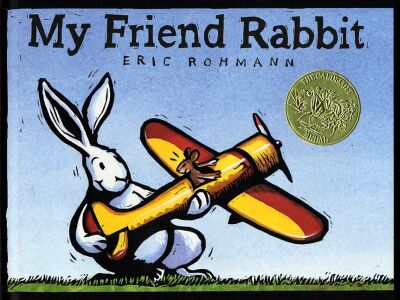
My Friend Rabbit should've been left alone as a book. The TV show knock-off is all talk, talk, talk. Who needs words when the pictures say it all?

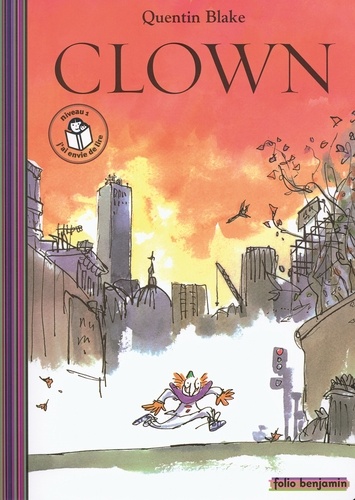
Peter Spier's Noah's Ark and Rain, Raymond Briggs' The Snowman and Quentin Blake's Clown are classics in the genre,


as are Pat Hutchins' Changes Changes and a personal favourite of mine, Picnic, by Emily Arnold McCully.


Both these works have been adapted into excellent short films that have now become part of the Scholastic video collection.
More recent works include several of the books by David Wiesner. My daughter loves Tuesday, Flotsam and especially Sector 7.


There's also Australian Jeannie Baker's Window

And finally, here are two that are colour-themed:
Jae-Soo Liu's The Yellow Umbrella and Barbara Lehman's The Red Book.


There's also books like Chris van Allsburg's The Mysteries of Harris Burdick and the Imagine a Day/Night/Place books that use the paintings of Rob Gonaslaves. These books are neither wordless nor do they tell a continuous narrative; instead, they provide an evocative caption for each illustration that prompts the reader to take control of the storytelling. It's like having 10-20 individual stories per book.


There's plenty more books in the wordless genre than the ones I've listed here. Do you have a favourite? Have you read any of these with children? Did you enjoy the experience or did you find yourself awkwardly sputtering, trying to fill in the story? Do you leave them lying around for kids to stumble on? Pack them in the car for long road trips? Use them as prompts for crafts or writing assignments? Tell me. I'd like to know.
You can't go wrong with any of these:
The Carl books by Alexandra Day wherein a beloved Rottweiler minds the baby, while the baby's mother gets on with her errands and her life. There's at least a dozen in the series now.
Eric Rohman's wordless or near wordless picture books:
Time Flies depicts the journey of a bird through a prehistoric, dinosaur-laden landscape. It's a must for any dinosaur-crazed kid.My Friend Rabbit should've been left alone as a book. The TV show knock-off is all talk, talk, talk. Who needs words when the pictures say it all?
Peter Spier's Noah's Ark and Rain, Raymond Briggs' The Snowman and Quentin Blake's Clown are classics in the genre,
as are Pat Hutchins' Changes Changes and a personal favourite of mine, Picnic, by Emily Arnold McCully.
Both these works have been adapted into excellent short films that have now become part of the Scholastic video collection.
More recent works include several of the books by David Wiesner. My daughter loves Tuesday, Flotsam and especially Sector 7.
There's also Australian Jeannie Baker's Window
And finally, here are two that are colour-themed:
Jae-Soo Liu's The Yellow Umbrella and Barbara Lehman's The Red Book.
There's also books like Chris van Allsburg's The Mysteries of Harris Burdick and the Imagine a Day/Night/Place books that use the paintings of Rob Gonaslaves. These books are neither wordless nor do they tell a continuous narrative; instead, they provide an evocative caption for each illustration that prompts the reader to take control of the storytelling. It's like having 10-20 individual stories per book.
There's plenty more books in the wordless genre than the ones I've listed here. Do you have a favourite? Have you read any of these with children? Did you enjoy the experience or did you find yourself awkwardly sputtering, trying to fill in the story? Do you leave them lying around for kids to stumble on? Pack them in the car for long road trips? Use them as prompts for crafts or writing assignments? Tell me. I'd like to know.
Subscribe to:
Posts (Atom)